Bedding · Materials & comfort
How Sheet Weaves Change the Feel of Your Bed
A sheet is more than a layer between you and the mattress. Its weave—the pattern in which threads cross—helps determine whether the fabric feels crisp or smooth, airy or substantial, relaxed or neatly draped. Understanding that structure can make choosing organic cotton sheets less a matter of guesswork and more a decision grounded in how you like to sleep.
A small pattern with a nightly presence
At first glance, a sheet seems simple: a broad expanse of cloth, pulled over a mattress and smoothed into place. But look closely and the surface resolves into a grid. Lengthwise threads, known as warp, intersect with crosswise threads, called weft. The arrangement of those crossings is the weave. It is a quiet piece of engineering, repeated across the fabric, and its effects are felt whenever a sleeper turns, stretches, or settles beneath the covers.
Weave influences the texture that meets the skin, the way a sheet folds over a mattress edge, and how much air can move through the cloth. It does not act alone. Fiber type, yarn construction, fabric weight, finishing treatments, and care all contribute to the final feel. Yet weave is an especially useful place to begin when comparing sheets because it helps explain why two fabrics made from cotton can feel quite different.
There is no universally best weave. Someone who likes a cool, crisp surface may want something different from a sleeper drawn to a smooth, softly draping bed. The aim is not to find a technically superior fabric, but to understand the qualities that suit your preferences and routine.
What the threads are doing
In the simplest woven cloth, each crosswise thread passes over one lengthwise thread and then under the next. This basic arrangement is called a plain weave. Its balanced, regular structure is familiar from many everyday textiles. In bedding, a plain-weave cotton sheet is often described as crisp or cool-feeling, though the exact result depends on the yarns, density, finishing, and how the cloth has been washed.
Sateen uses a different pattern. Instead of alternating over and under at every crossing, a thread passes over several others before going beneath one. The longer sections of thread that lie across the surface—sometimes called floats—create a smoother face and a gentle drape. They can also catch light differently, giving some sateen fabrics a soft, understated sheen.
That smoothness is not the same as silkiness, nor does it mean every sateen has a glossy surface. Organic cotton sateen may look subdued and feel softly polished rather than shiny. The difference is often best understood through touch: the surface can feel more continuous beneath the hand, with less of the distinct, dry texture many people associate with crisp cotton.
Other weave structures exist, including twill, recognizable by its diagonal pattern in fabrics such as denim. Twill’s construction can produce a supple, sturdy cloth, but bed sheets are more commonly compared through the feel of percale-style plain weaves and sateen. When shopping, a clear description of the weave offers more useful information than a vague promise of softness alone.
Sateen: smoothness and drape
For sleepers who enjoy a soft hand and a fabric that falls fluidly across the bed, sateen can be an appealing choice. The longer surface floats give the cloth its characteristic smooth impression. A sateen top sheet may settle into broad, soft folds, while a fitted sheet can feel substantial and composed against the mattress. These qualities often make sateen feel inviting in cooler rooms or to people who prefer a warmer-feeling surface.
That impression is not a promise that sateen will make a bed hot. Sleep temperature depends on many things: the room, mattress, duvet or comforter, pajamas, body temperature, and personal sensitivity. Cotton can absorb moisture, and a fabric’s weight and finishing also matter. A tightly woven, weightier sheet may feel different from a light one, even when both are sateen. If you tend to sleep warm, consider the whole bedding arrangement rather than judging by weave name alone.
Sateen’s smoothness can be particularly noticeable when the bed is freshly made. With use and laundering, the fabric may relax and develop a softer, more familiar hand. How it changes over time depends on the quality of the yarns, the construction, and how it is cared for. As with other woven cottons, gentle washing and avoiding excessive heat can help preserve the fabric’s feel.
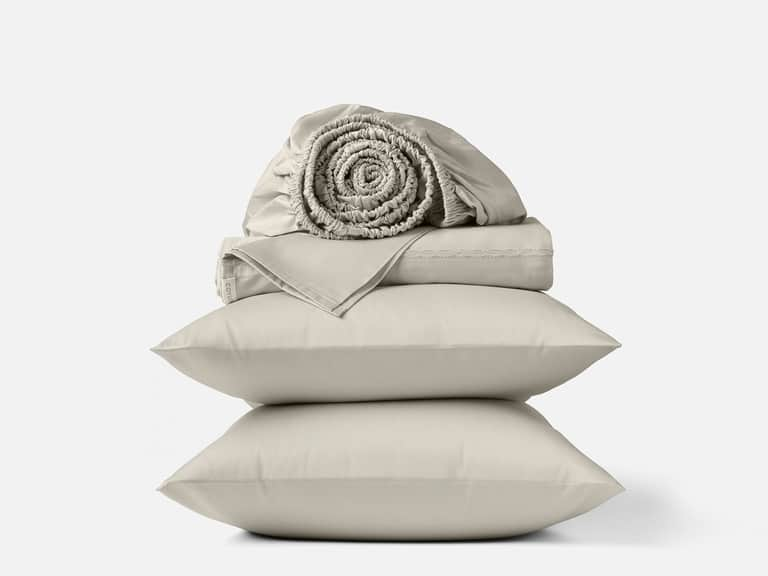
The Cloud Soft Organic Sateen Sheet Set is made from GOTS-certified organic cotton woven in a sateen construction. Its product details describe a smooth, warm feel, a subtle sheen, and a weighty drape. The set includes a flat sheet, fitted sheet, and pillowcases. It is also described as finished with miDori bioSoft, a USDA-certified bio-based softener. Those details offer a practical example of how fiber, weave, and finish work together to shape a sheet’s character.
Crispness, softness, and the first touch
People often use words such as “crisp,” “cool,” “buttery,” and “silky” to describe sheets. These are useful impressions, but they are not standardized measurements. One person’s ideal crispness may feel stiff to another. A fabric’s first impression can also change after washing, as manufacturing finishes are removed and the cotton relaxes.
Plain-weave cotton is frequently associated with a more matte, crisp touch. Sateen tends toward a smoother surface and more fluid drape. These are broad tendencies, not guarantees. Yarn thickness and twist, the tightness of the weave, the finishing process, and the cotton itself all influence what a hand feels. Even two sateen sheets can differ noticeably if one is light and airy while the other is densely woven and heavier.
It can help to imagine the experience across the night rather than only at the moment of purchase. A smooth sheet may glide easily as you shift position. A crisp sheet may feel freshly laundered and airy. A heavier fabric may settle close to the body, while a lighter one can feel less present. None of these sensations is inherently better; each is a different answer to the question of what comfort means to you.
Why thread count is only one clue
Thread count is often treated as a shorthand for sheet quality, but it cannot describe the entire fabric. It refers to the number of threads counted within a square inch, including lengthwise and crosswise threads. How those threads are made and woven matters. A high number, by itself, does not reveal whether the sheet feels crisp, smooth, breathable, or durable.
Yarn quality, fiber length, construction, finishing, and the integrity of the manufacturing process all contribute to performance. A modest thread count in a well-made fabric may feel more appealing and last better than a higher number achieved through methods that do not match your priorities. Marketing language can make comparisons difficult, so look for specific information: fiber composition, weave, finish, origin when provided, certifications, and washing instructions.
For organic cotton sheets, certification can help clarify how the product is represented. For example, GOTS certification applies to textiles made with organic fibers and includes criteria across processing and production. It is a useful point of reference, though certification does not tell you whether you will personally prefer sateen’s smoothness to a crisper weave. Sensory comfort remains individual.
The role of fabric weight and finish
Weave creates the framework, but weight helps determine how that framework behaves. A lighter fabric can feel airy and move easily; a heavier one may have a more substantial hand and pronounced drape. The weight of a sheet is not always listed in a directly comparable way, so product descriptions and, where possible, handling the fabric can provide useful context.
Finishing treatments can also influence the surface. Some finishes are intended to make fabric feel softer, reduce wrinkles, or alter how it handles moisture. A softener may give cotton a smoother initial hand, while a wrinkle-resistant finish can change how the fabric looks after drying. These attributes should be considered alongside the weave, rather than mistaken for the weave itself. A sateen sheet can feel different depending on its finish, and the same finish may behave differently on another fabric.
When assessing a description, distinguish between what is inherent in construction and what comes from treatment. “Sateen” identifies a weave structure; “softened” describes a finish. “Organic cotton” identifies the fiber’s production standard when supported by the appropriate certification. Clear product details make it easier to understand which qualities are likely to persist and which may evolve with laundering.
Choosing for your sleeping climate
A sheet does not regulate temperature in isolation. The space between the sleeper and the room is a small climate shaped by layers. A mattress protector, mattress material, pajamas, duvet cover, comforter fill, and the room’s ventilation all influence warmth and moisture. The sheet is the first textile against the skin, but it is one part of a larger system.
If you often feel cool at bedtime, a smooth, weightier sateen may feel comforting. If you prefer a crisp, light touch, you may gravitate toward a plain weave. If your temperature changes through the year, consider whether the same sheet can serve across seasons with adjustments to the top layers. A breathable cotton sheet paired with a lighter cover in summer and a warmer comforter in winter can offer flexibility without requiring a completely different bed setup.
It is also worth noticing where discomfort begins. If you wake warm, the cause may be a thick comforter or a room that retains heat rather than the sheet alone. If the fabric feels clammy, consider moisture, ventilation, and laundering as well as construction. A measured approach—changing one layer at a time—can help reveal what is actually making the bed feel uncomfortable.
Care is part of the fabric story
Good sheet care is not complicated, but consistency matters. Follow the manufacturer’s instructions because finishes, stitching, and fabric construction can call for different routines. For the Cloud Soft Organic Sateen Sheet Set, the stated care instructions recommend machine washing cold on a gentle cycle with like colors, then tumble drying on low and removing promptly. A warm iron may be used if desired.
Washing at an appropriate temperature, using a gentle cycle, and avoiding an overfilled machine can reduce unnecessary abrasion. Removing sheets promptly from the dryer may help limit creases. High heat can place added stress on cotton fibers and may affect a fabric’s appearance over time, so the recommended drying temperature is worth observing. If a sheet feels different after laundering, consider whether water temperature, detergent, drying heat, or a new finish might be involved.
Rotating between sheet sets can give each one a break between uses and washing. Keeping spare bedding clean and fully dry before storage helps it remain fresh. These simple habits are not a guarantee against wear—every textile has a lifespan—but they can make everyday use more predictable and help preserve the qualities that first attracted you to the fabric.
A practical way to compare sheets
Rather than begin with a single number, compare a few features in a consistent order. First, identify the fiber: is the fabric cotton, and is it certified organic if that is important to you? Next, check the weave. Then consider the weight and finish, along with the care routine and the depth of the fitted sheet. These details describe both the experience of sleeping on the fabric and the work involved in maintaining it.
- Think about touch: Do you prefer a smooth, polished surface or a more crisp, matte feel?
- Consider drape: Should the sheet fall softly over the bed, or do you prefer a firmer, more structured look?
- Review the full bedding setup: A sheet’s warmth is affected by the other layers and by the room.
- Read the care instructions: Match the recommended washing and drying routine to what you can maintain.
- Check fit: Confirm that the fitted sheet suits your mattress dimensions and depth, including any topper.
- Look beyond thread count: Use weave, fiber, finishing, certification, and construction together to assess a fabric.
If you can handle samples, notice the fabric in more than one way. Run your fingers across it, let it fall over your hand, and gently gather it into a fold. A sheet’s character is not only its surface texture; it is also how it moves. If you are shopping from a description, look for concrete terms about weave, fiber, finish, and care rather than relying on broad adjectives alone.
Comfort is a pattern of small preferences
The difference between two sheets may seem subtle in daylight. At night, repeated contact makes that distinction more noticeable. A surface can feel welcoming when you climb into bed, then recede into the background as you sleep. For another person, a particular texture may remain present all night. Comfort is personal, shaped by habit, climate, sensitivity, and the layers surrounding the body.
That is why the best sheet weave is the one that fits the sleeper, not the one with the most impressive-sounding specification. Sateen offers a useful example: its distinctive construction encourages a smooth surface and fluid drape, while the cotton fiber, fabric weight, and finishing refine the result. A thoughtfully chosen sheet is a small material decision with a daily return—a familiar texture waiting at the end of the day.
When comparing organic cotton sheets, begin with the qualities you actually notice: crispness, softness, weight, temperature, or ease of care. Learn what the weave contributes, then read the rest of the product details. The thread pattern may be nearly invisible, but it is woven into every fold of the bed.